Why Weather-Resistant Farming Drones Are Becoming a Must-Have for UK Growers
Flying Through the British Weather
If you have ever stood in a wet, windswept field in early April, watching a forecast that keeps shifting, you know why timing matters in agriculture. A window for spraying or seeding can close in hours. That is where modern drone work earns its keep, but only if the equipment can handle what the sky throws at it. For UK growers, weather-resistant farming drones are not a luxury anymore. They are becoming a practical answer to a very old problem: getting the job done when conditions are good enough, not perfect.
The reality of British farming is that perfect conditions are rare. You wait days for the wind to drop, only for rain to roll in. By the time it clears, the crop has moved on. Drones that fold at the first sign of drizzle or a gust of 15 knots just add to the frustration. The machines that earn their place in a farm operation are the ones built to shrug off light rain, resist dust, and keep flying when the wind picks up. That resilience is what separates a tool from a toy.
What Weather Resistance Actually Means
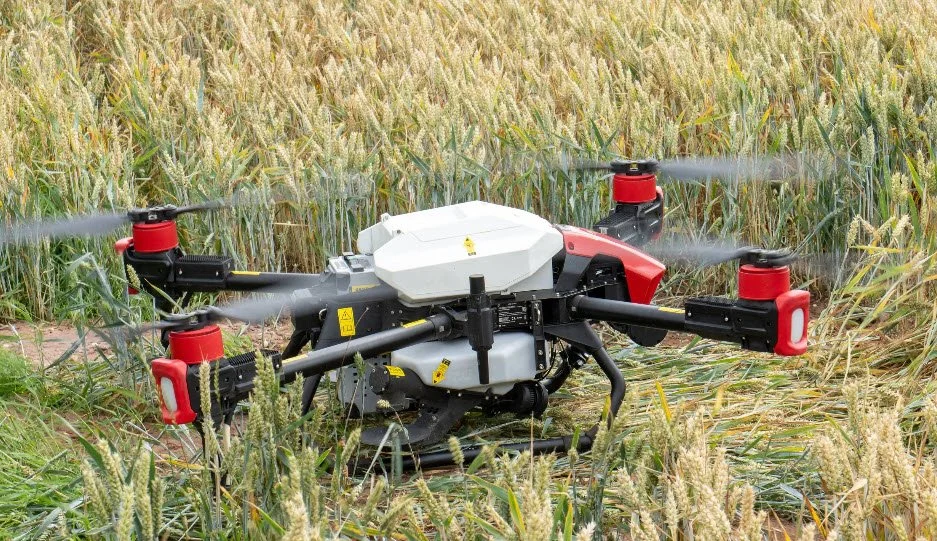
Weather resistance is not the same as waterproofing. No drone is meant to fly through a downpour, and no manufacturer claims that. What weather-resistant farming drones offer is a higher threshold for workable conditions. Sealed electronics, corrosion-resistant materials, and motors that handle moisture better all play a part. The DJI Agras series, for instance, comes with an IP rating that allows operation in light rain, which is a genuine advantage during a British spring.
Wind is another factor. A drone rated for 12 metres per second can still fly safely in a breeze that would ground a smaller consumer model. That matters when you are spreading seed or spraying a fungicide. The XAG P100, a rugged workhorse from China, is designed with high wind speeds in mind, using a coaxial rotor setup that gives it extra stability. Similarly, the AgEagle RX-60, though more of a fixed-wing mapping platform, handles gusty conditions better than many of its peers, which is why it remains popular for survey work in exposed coastal areas.
Matching the Machine to the Job
It is easy to get caught up in specs, but the real skill is matching the machine to the job. For broad acre spraying, a large multirotor like the DJI Agras T40 or the Hylio series can cover ground quickly, but they need a battery or fuel strategy that fits your day. For smaller fields or spot treatments, a lighter option might be better, even if it means more flights. The key is understanding the trade-off between capacity and agility.
For mapping and crop health analysis, fixed-wing platforms such as the senseFly eBee X or the AeroVironment Quantix offer long flight times and can cover hundreds of hectares in a single sortie. They are not spraying machines, but they are essential for scouting. The imagery they capture, often with sensors like the MicaSense RedEdge or the Parrot Sequoia, gives you a clear picture of where stress is building. That data drives decisions about where to send the sprayer, saving time and chemistry.
One thing I have learned from working with growers is that the drone is only half the equation. The other half is the software that turns raw data into action. Platforms like DroneDeploy and PrecisionHawk have made it easier to process multispectral images into prescription maps. You can literally see which parts of a field need more nitrogen and which are fine. That kind of precision pays for itself quickly.
The Spraying Side of Things
Spraying from a drone is a different beast from flying a camera. The payload is heavier, the margins for error are tighter, and the drift risk is real. That is why companies like Spraying Systems Co. and TeeJet Technologies have developed specialised nozzles and pumps for drone use. These components are designed to produce a consistent droplet size, which reduces drift and improves coverage.
The Yamaha RMax has been a pioneer in this space for decades, though it is more of a small helicopter than a drone. Its longevity in Japan proves that aerial application can be reliable and effective. More recent entrants like the XAG P100 and the Hylio 210 have pushed the technology further, with better autonomous features and easier maintenance.
For UK farmers, the regulatory side cannot be ignored. The UK Civil Aviation Authority has clear rules about flying drones for commercial purposes, including the need for a valid operator ID and, for certain operations, a permission from the CAA. Spraying adds another layer because it involves the application of chemicals, so you need to be aware of the relevant legislation around pesticide use. It is not insurmountable, but it requires planning.
Real-World Lessons from the Field
I have spoken to contractors who run fleets of agricultural drones across the UK and Europe. One name that comes up often is Brett Adair, who runs a drone service company in the US and has been vocal about the practical realities of field work. He often points out that weather resistance is not just about surviving a shower; it is about being able to finish the job without constantly worrying about the forecast.
Another operation, Rantizo, has built a business around drone spraying in the American Midwest. They use DJI Agras models and have refined their workflows to handle variable conditions. Their experience shows that with the right equipment and procedures, drones can be a reliable part of a spraying programme, not just a novelty.
On the data side, Agribotix was an early player in drone-based crop analytics, and while the company has evolved, its legacy lives on in the tools we use today. Sentera offers a range of sensors that bolt onto drones and provide high-resolution imagery for weed detection and plant health. These tools are not just for large farms; even a smallholder can benefit from a simple map that shows where the crop is struggling.
Practical Considerations for UK Buyers
If you are thinking about adding a drone to your operation, start with a clear idea of what you want it to do. Spraying, seeding, and mapping are different tasks that require different airframes. A good approach is to rent or borrow a unit first, if you can, to see how it fits your routine. Talk to other farmers who use them, and do not be afraid to ask about the downsides.
Battery life is always a concern. A typical multirotor spraying drone might give you 10 to 15 minutes of flight per battery, depending on payload and wind. That means you need a set of spare batteries and a charging strategy that does not leave you waiting around. Some operators use a generator in the field to keep batteries topped up, which works well if you are covering a large area.
Maintenance is another factor. Sealed bearings, corrosion-resistant frames, and quality connectors all reduce downtime. Look for drones that are easy to clean, because mud and crop residue will find their way into every crevice. A quick rinse after each job, followed by a dry, will extend the life of your investment significantly.
The Verdict: Worth the Investment?
For many UK farms, the answer is yes, provided you choose the right machine and use it within its limits. Weather-resistant farming drones have matured to the point where they can handle the typical conditions of a British growing season, from the damp of spring to the heat of summer. They are not a replacement for a tractor or a conventional sprayer, but they fill a niche that other tools cannot: quick, targeted intervention when it matters most.
The cost of a professional-grade drone, with sensors and software, can be substantial. But when you calculate the savings in seed, chemical, and time, the numbers often work out. And with new models arriving regularly, the technology is only getting better. Whether you are a large arable operation or a mixed farm with smaller fields, there is likely a drone that fits your needs and your budget.
In the end, the best advice is to start small, learn the basics, and build from there. The weather will always be unpredictable, but with the right equipment and a sensible approach, you can take some of the worry out of farming. That is what weather-resistant farming drones are really about: giving you more control over the things you can manage, so you can better handle the things you cannot.